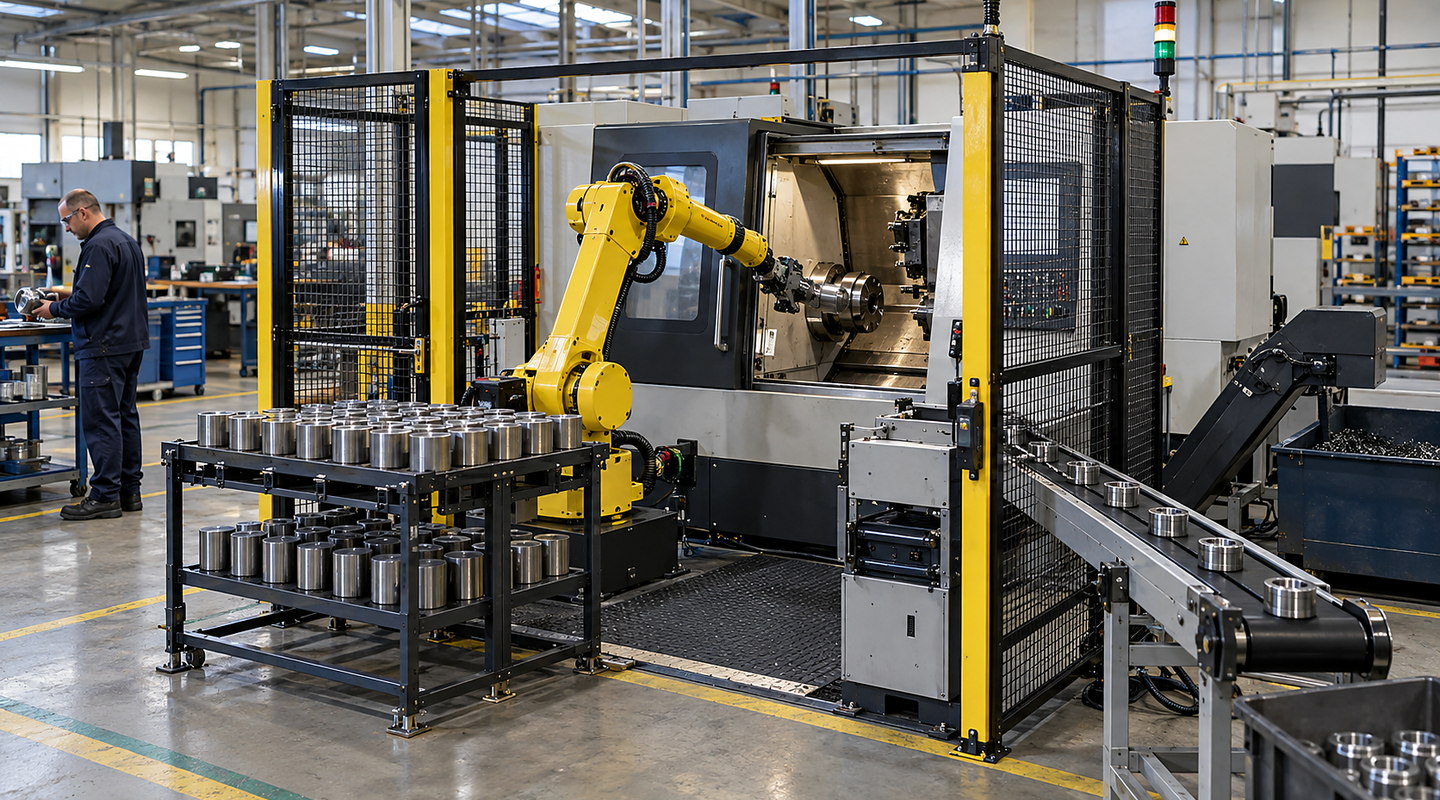
Robot Cell Retrofits: How the Process Works
Plan a robot cell retrofit from the documented existing cell through feasibility trials, defined interfaces, controlled changeover and representative run-off.
Start a robot cell retrofit with the documented current cell and the proposed new task. Identify retained, modified and replaced items, test uncertain handling or process steps, then agree interfaces, changeover stages and representative run-off before production release.
Use the existing-cell brief and run-off plan. Keep current drawings and program/configuration versions with their backup and recovery responsibilities; the existing cell alone does not establish suitability for a changed task.
Understand the complete route from input to accepted output — Robot Cell Retrofits
Plan robot cell retrofits around your parts, process, cycle time, tooling, recovery and acceptance criteria. Discuss the highest-risk feasibility questions with Oxford Industrial Automation. Follow the material or part through each operating step and include recovery, cleaning and change in the real cycle.
Discuss your application

Four clear stages for robot cell retrofits
At each stage, you can review how part, product and process variation for existing robot-cell upgrades and run-off criteria and production evidence affect the next commitment.
- 01
Observe the Current Process and Collect Representative Samples
Share representative parts, process observations and cycle data, including the normal range for part, product and process variation for existing robot-cell upgrades and the difficult arrival pattern and presentation cases.
- 02
Prove Handling and Process Risks in a Focused Feasibility Trial
Compare suitable methods and use focused trials to show how each option performs against required cycle and production pattern.
- 03
Design and Build the Complete Guarded Cell
Connect the equipment to your line, services and controls while resolving tooling, sensing and process interfaces for day-to-day operation.
- 04
Run Agreed Scenarios and Support Production Ramp-Up
Confirm operator access, recovery and changeover, then complete and record run-off criteria and production evidence before your operating team takes over.
Decisions and results stay connected
| Stage | What happens | What you can review |
|---|---|---|
| Establish the current cell and change boundary | Collect current drawings, programs, tooling, fixture and interface information, available safety documents and known obsolete items. | A named baseline with version/backup ownership and a clear retained, modified or replaced scope. |
| Trial uncertain handling and process steps | Use representative parts and real arrival conditions to assess the proposed task against the existing cell and intended cycle. | Observed handling, process and presentation limits, plus unresolved assumptions and agreed follow-up work. |
| Plan interfaces and controlled changeover | Resolve fixtures, tooling, services, signals, access and affected functions. Agree staged changes, the installation window and recovery decisions. | Interface owners, change records and defined checks before each stage or any return to an earlier arrangement. |
| Run representative scenarios and release | Test the complete sequence, difficult cases, connected-equipment states, changes and controlled recovery against agreed criteria. | Configuration-linked results, discrepancies, required retests, documentation and named production-release responsibilities. |
Keep connected responsibilities clear
Your final robot cell retrofits scope must also account for operator access, recovery and changeover, run-off criteria and production evidence, current regulations and the conditions at your site.
- Cycle time depends on the complete process rather than robot speed alone.
- Part presentation, tolerances and recovery cases must be included in feasibility work.
- Collaborative operation or automatic handling cannot be assumed safe without an application assessment.