Mechanical
Record retained and changed fixtures, tooling, locations, loads, working space and transfers. Check mounting and service access against the actual new parts and process, including recovery and maintenance tasks.
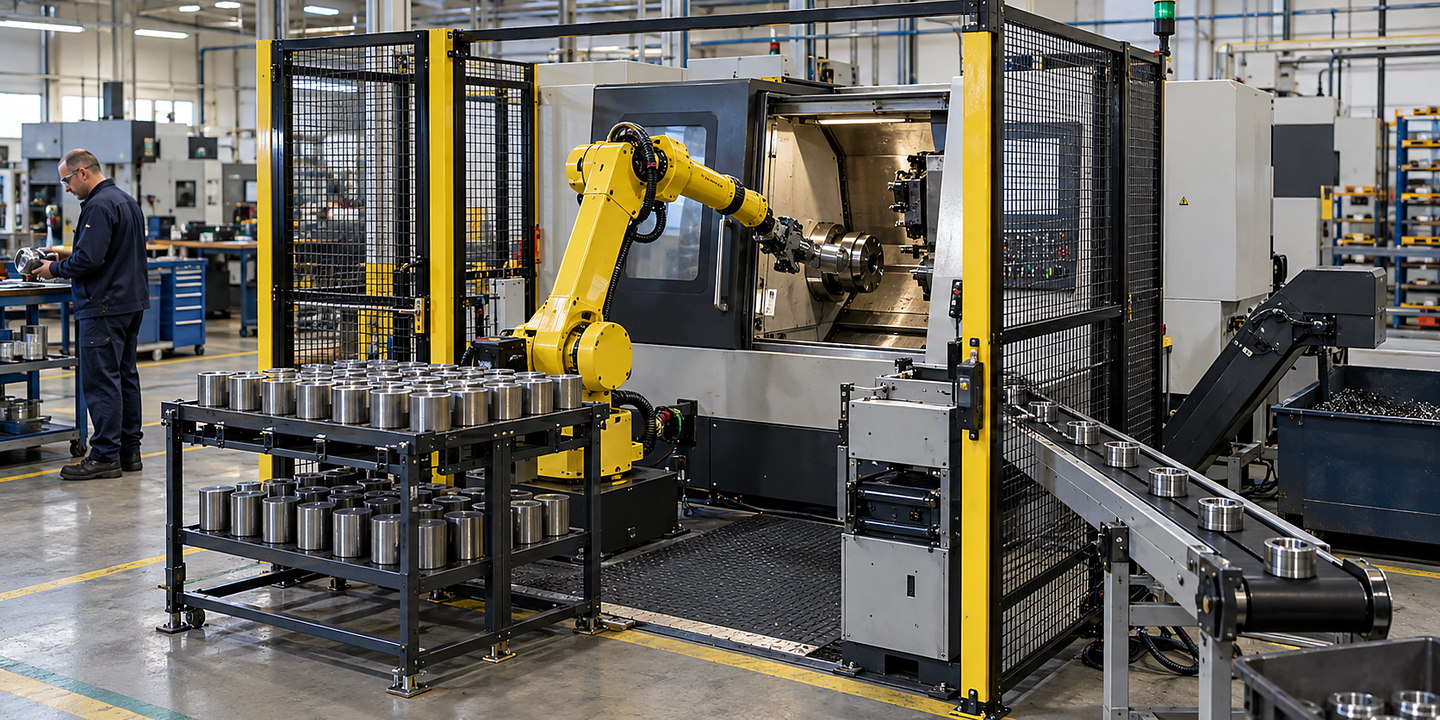
Define robot cell retrofit interfaces for fixtures, tooling, services, controls, affected functions, version records, recovery and operator handover.
Treat each retained or changed connection as a defined retrofit interface. Record mechanical location and access, tooling and services, control signals and operating states, program/configuration versions and affected functions. Assign owners for testing, faults, recovery and release into operation.
Use the interface brief and representative run-off. Confirm compatibility and usable backup/recovery arrangements for the actual equipment; do not assume an existing connector, program or network link remains suitable after a change.
Plan robot cell retrofits around your parts, process, cycle time, tooling, recovery and acceptance criteria. Discuss the highest-risk feasibility questions with Oxford Industrial Automation. Your integration review should connect required cycle and production pattern, tooling, sensing and process interfaces and the people who run the process.
Discuss your application

Record retained and changed fixtures, tooling, locations, loads, working space and transfers. Check mounting and service access against the actual new parts and process, including recovery and maintenance tasks.
List the actual equipment supplies, isolation, protective arrangements, panels, utility needs and cable routes. Identify modifications and responsible site teams; confirm the suitability of retained connections.
Record current program/configuration versions, operating modes, signal handshakes, faults and recovery states. Agree compatibility checks and controlled version changes, including how connected equipment responds during interruptions.
Identify which access arrangements and functions the proposed changes affect, using available documentation and an application assessment. Assign the necessary review and validation work; a successful production trial alone does not complete those checks.
Keep current drawings, programs, settings and configuration/version records together with backup ownership. Define the result records, retention and recovery evidence required for the actual cell and its connected systems.
Name change, backup, trial and release owners. Train normal operation, changeover, controlled recovery and maintenance for the modified scope, with unresolved restrictions and later changes documented.
For Robot Cell Retrofits, your team can review each stage before the complete installation is put into routine use.
Share representative parts, process observations and cycle data, including the normal range for part, product and process variation for existing robot-cell upgrades and the difficult arrival pattern and presentation cases.
Compare suitable methods and use focused trials to show how each option performs against required cycle and production pattern.
Connect the equipment to your line, services and controls while resolving tooling, sensing and process interfaces for day-to-day operation.
Confirm operator access, recovery and changeover, then complete and record run-off criteria and production evidence before your operating team takes over.
For your application: check required cycle and production pattern, tooling, sensing and process interfaces, operator access, recovery and changeover, and run-off criteria and production evidence as part of the complete line trial.