Current condition
Record the current cell configuration and agreed retrofit boundary, then define the expected results and methods for production, interface, changeover and recovery checks. Name the owners of separate affected-function reviews.
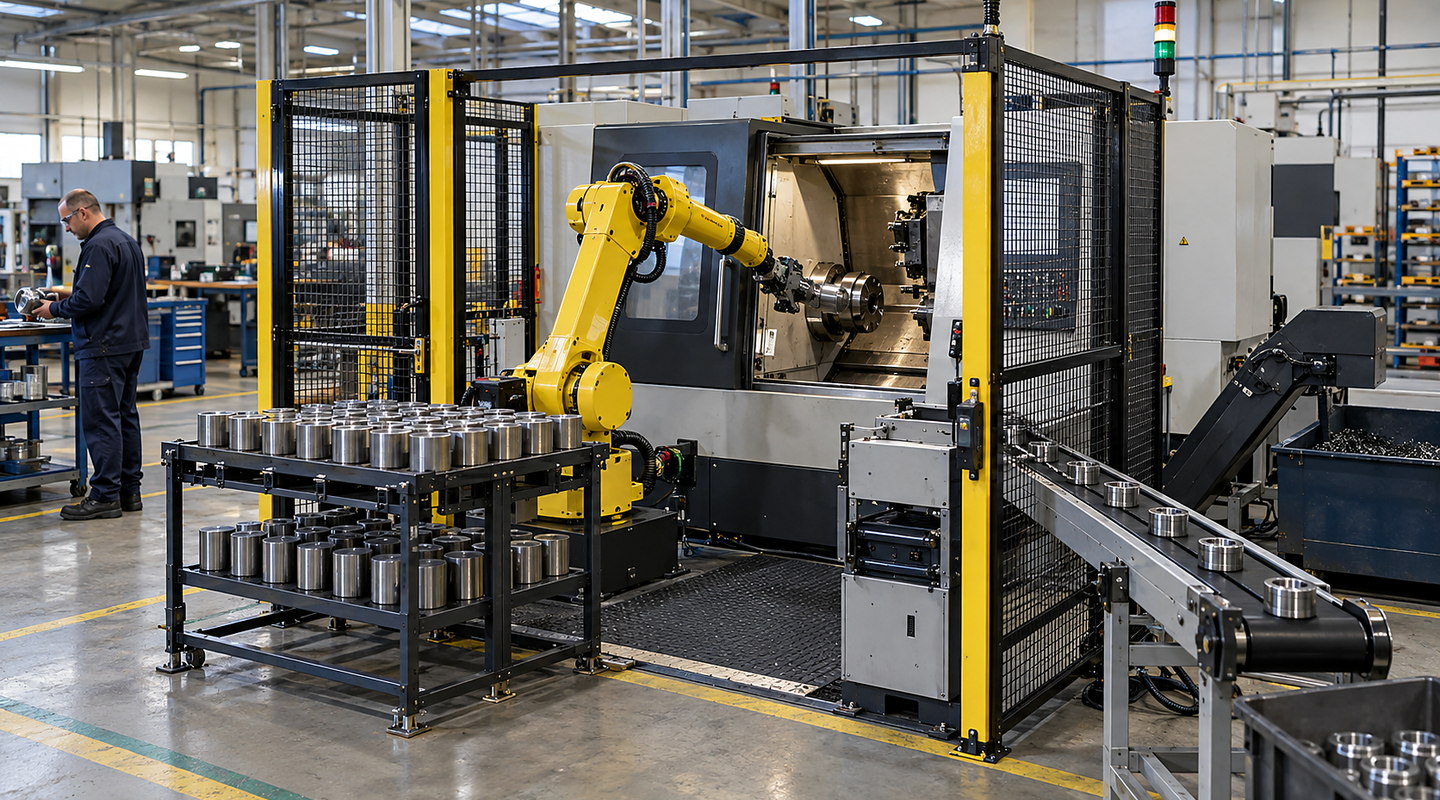
Agree robot cell retrofit run-off for representative parts, complete cycles, interfaces, changeovers, controlled recovery and documented release decisions.
Agree the retrofit run-off against the intended part range and complete operating sequence. Include normal production, difficult presentation, connected-equipment states, changeover and controlled recovery. Keep expected results, repetitions, configuration versions and discrepancies with the evidence reviewed before release.
Link the agreed retrofit scope to the interface owners. Successful handling trials do not establish every affected function or complete application approval; identify the separate checks and responsible reviewers required for this cell.
Plan robot cell retrofits around your parts, process, cycle time, tooling, recovery and acceptance criteria. Discuss the highest-risk feasibility questions with Oxford Industrial Automation. Use this guide to resolve run-off criteria and production evidence before it limits the final system.
Discuss your application

Record the current cell configuration and agreed retrofit boundary, then define the expected results and methods for production, interface, changeover and recovery checks. Name the owners of separate affected-function reviews.
Include the intended parts, presentation and production pattern, credible difficult conditions and connected-equipment states. State repetitions, untested limits and the configuration used.
Tie discrepancies and retests to the changed or retained function involved. Keep release decisions, restrictions and updated operating information with the evidence for the configuration actually installed.
Identify the part and process range covered by run-off. Use representative normal and difficult samples and list the untested variants or conditions explicitly.
Reproduce intended arrival, orientation, fixtures and handovers, including agreed difficult presentation. Record accepted results and the conditions producing a failure.
Agree how the complete cycle is measured and which operating period or repetitions are required. Include connected-equipment waiting and operator tasks in the result record.
Check agreed mechanical, utility, sensing and control interfaces against their expected states. Identify the separate affected-function checks and responsible reviewers in the acceptance scope.
Test representative changeover and controlled recovery under an agreed procedure. Record configurations, operator actions and the criteria for resuming the intended production task.
Retain expected and observed results, program/configuration versions, discrepancies and retests. Name who approves unresolved restrictions, training, documentation and release into production.